
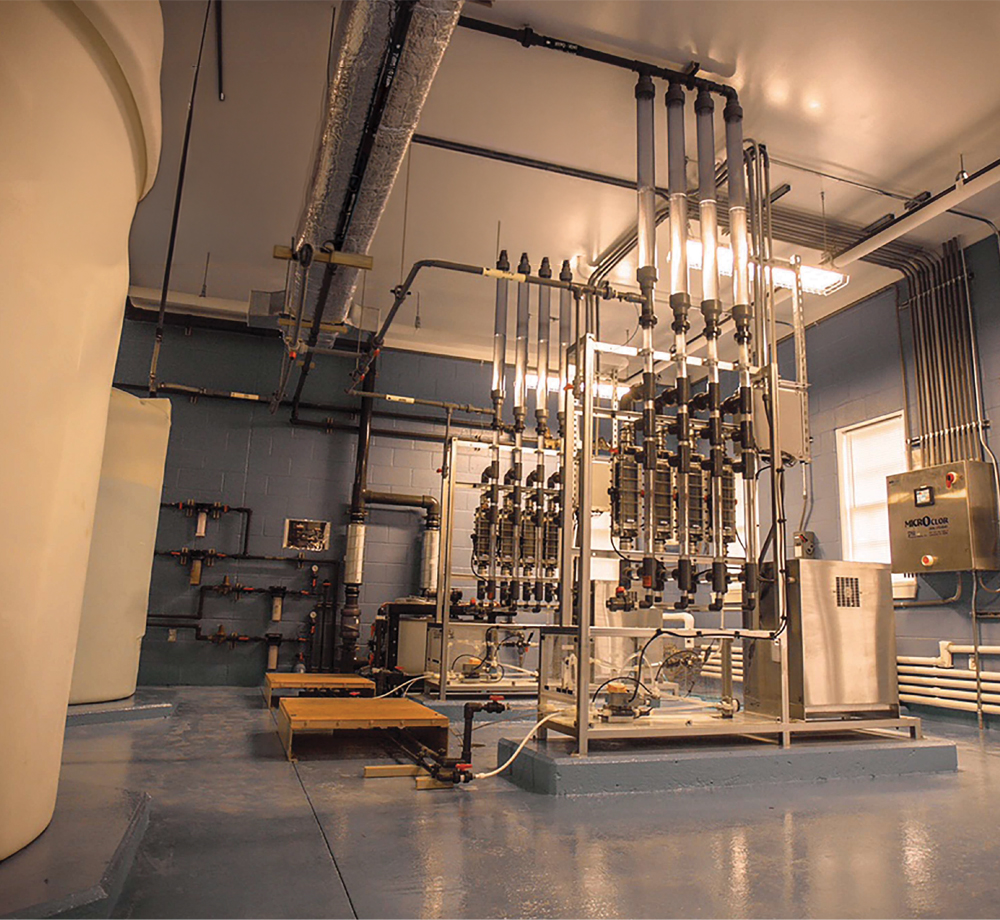
An Evaluation
When considering disinfection of drinking water and wastewater chlorine is often used for achieving the desired level of residual. In this evaluation we will look at why the Microclor OSHG system is a leading solution for generating 0.8% bleach in comparison to high strength (12.5%) bulk sodium hypochlorite.
1. Significantly Improved Safety
- Microclor produces 0.8% hypochlorite, below hazardous material thresholds, reducing operator HazMat exposure.
- No need to store or handle high‑strength (12.5%) commercial bleach, which degrades and can form harmful byproducts.
- Eliminates risks from transporting and unloading hazardous chemicals—only salt, water, and electricity are required.
2. Fewer Deliveries & Lower Risk
- OSHG reduces chemical deliveries by about 66%, cutting truck traffic, accident risk, and community exposure.
3. More Reliable Operations
- Facilities can store large quantities of salt, ensuring disinfection continuity during supply chain disruptions or emergencies.
- On‑site generation avoids concentration swings common in stored bulk bleach, which degrade faster in warm climates.
4. Lower and More Predictable Costs
- Producing hypochlorite on‑site typically costs 30–70% less than buying bulk bleach.
- Salt and electricity prices are far more stable than commercial bleach pricing, reducing budget volatility.
5. Environmental & Sustainability Benefits
- Fewer deliveries = lower carbon footprint.
- Reduced formation of harmful byproducts compared to concentrated commercial bleach.
6. Advanced System Design (Microclor‑Specific Advantages)
Microclor OSHG includes patented features that improve safety and reliability:
- Passive hydrogen removal to prevent pressure buildup.
- Vertical multi‑cell configuration for efficiency and compact footprint.
- High‑velocity electrolyte circulation reducing cleaning needs.
Quick Comparison Table
|
Feature |
Microclor OSHG |
Liquid Bleach (Bulk Sodium Hypochlorite) |
|
Concentration |
~0.8% (non‑hazardous) |
10–15% (hazardous) |
|
Safety |
Very high |
Moderate; chemical handling risks |
|
Stability |
Fresh, consistent |
Degrades over time, esp. in heat |
|
Deliveries |
Minimal (salt only) |
Frequent chemical deliveries |
|
Cost |
30–70% lower |
Higher, volatile pricing |
|
Environmental Impact |
Low |
Higher (transport + degradation) |
|
Operational Reliability |
High |
Dependent on supply chain |
Microclor OSHG is a safer, more cost‑effective, and more sustainable solution than liquid bleach for water and wastewater disinfection. It eliminates hazardous chemical handling, reduces operational costs, and ensures a consistent, reliable supply of disinfectant—making it a superior long‑term choice for utilities and facilities.