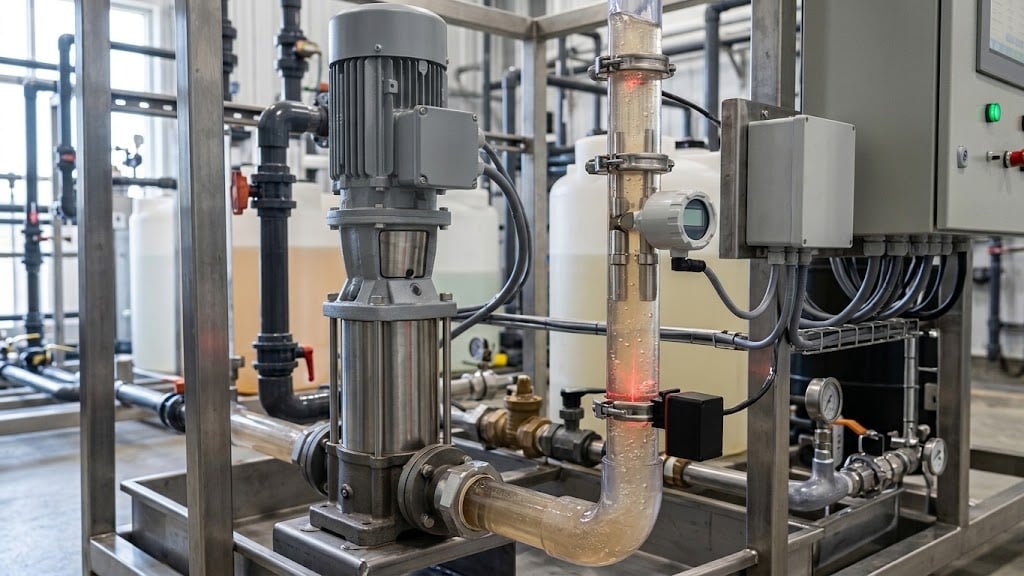
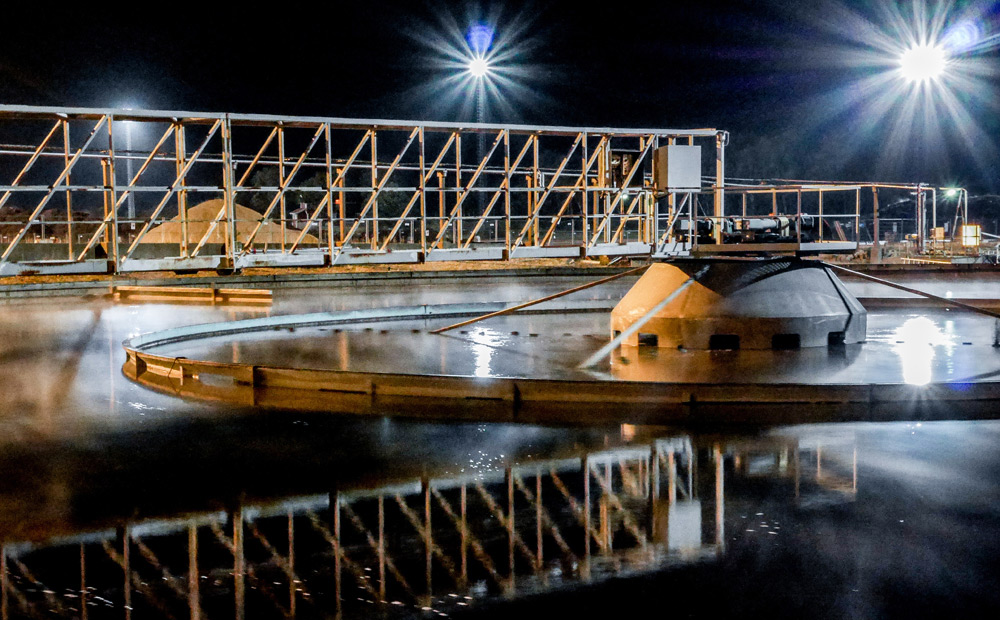
Choosing between dry and liquid (emulsion) polymer systems is a balance between initial capital expenditure and long-term operational costs. While liquid systems are easier to set up, dry systems generally offer superior chemical efficiency for high-volume plants.
Direct Comparison: Dry vs. Liquid Polymers
Dry Polymer Systems
Best for: Large-scale municipal or industrial plants with high chemical throughput.
- Pros:
- Cost Efficiency: Dry polymers are significantly cheaper per pound of "active" molecule. One facility reported major cost savings by switching from emulsion to dry.
- Performance: Often considered a more effective flocculant because it contains a higher concentration of active molecules.
- Stability: Unlike emulsions, dry powder does not separate or settle during storage.
- Cons:
- Capital Cost: The makedown equipment (hoppers, dust collectors, large aging tanks) is much more expensive to install.
- Operational Hassle: Handling bags creates "polymer dust," which becomes extremely slippery and hazardous when wet.
- Maintenance: Dry feeders and wetting heads require frequent cleaning to prevent "clumping".
Liquid (Emulsion) Polymer Systems
Best for: Smaller facilities, temporary setups, or plants where labor for maintenance is limited.
- Pros:
- Ease of Use: Systems are compact and largely "plug-and-play".
- Rapid Activation: Since the polymer is already in a liquid state, it "inverts" and activates much faster than dry powder.
- Lower Initial Cost: The feed equipment is smaller and significantly cheaper than dry systems.
- Cons:
- Higher Chemical Spend: You pay to ship the carrier oils and surfactants, making the "active" cost much higher.
- Environmental Impact: Emulsions contain oils and surfactants that can occasionally interfere with certain discharge permits or downstream processes.
- Settling: Emulsions can "break" or settle in the drum, requiring constant drum mixing or recirculation to stay effective.
The Bottom Line: Which should you choose?
- Choose Dry if your plant consumes more than 5,000–10,000 lbs of polymer annually. The savings on chemical costs will usually pay for the more expensive equipment in 18–36 months.
- Choose Liquid if you have limited floor space, low polymer usage, or a small maintenance staff that cannot dedicate time to cleaning dry-feed hoppers and dust systems.
Direct Comparison: Dry vs. Liquid Polymers
|
Feature |
Dry Polymer (Powder) |
Liquid Polymer (Emulsion) |
|
Active Content |
88% – 92% active polymer. |
25% – 50% active polymer; the rest is oil and water. |
|
Storage & Logistics |
High concentration reduces shipping costs and storage footprint. |
Higher shipping costs due to transporting "mostly water and oil". |
|
Aging Time |
Long: typically 45 – 60 minutes. |
Short: typically 10 – 30 minutes. |
|
System Maintenance |
High: Systems are prone to dusting, clogging, and mechanical wear. |
Low: Simple pump-and-mix systems; less mechanical complexity. |
|
Shelf Life |
Excellent: Can last up to 2 years if kept dry. |
Limited: 6 months to 1 year; prone to settling/separation. |
By evaluating key factors such as active polymer content, aging requirements, and maintenance labor, plant managers can select the infrastructure that best aligns with their throughput needs and budgetary goals.